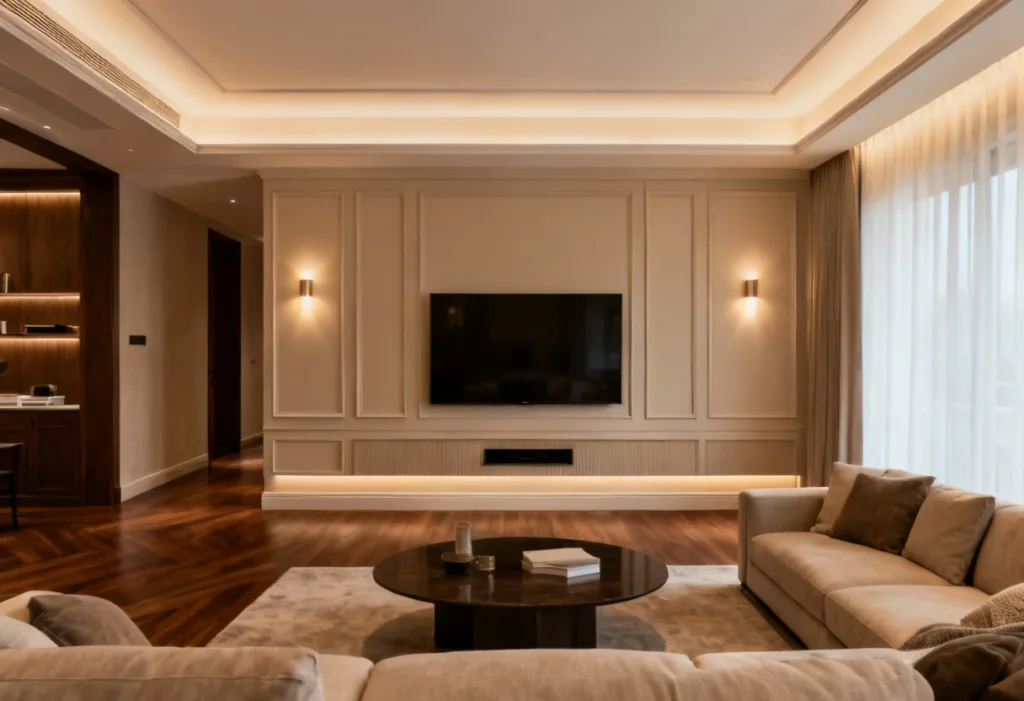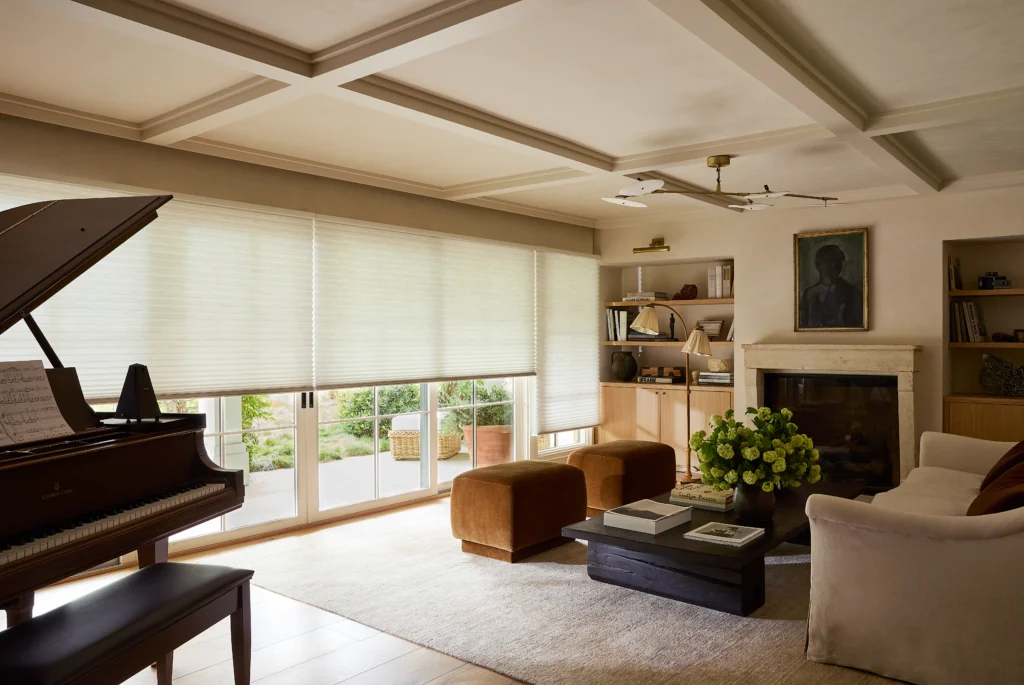
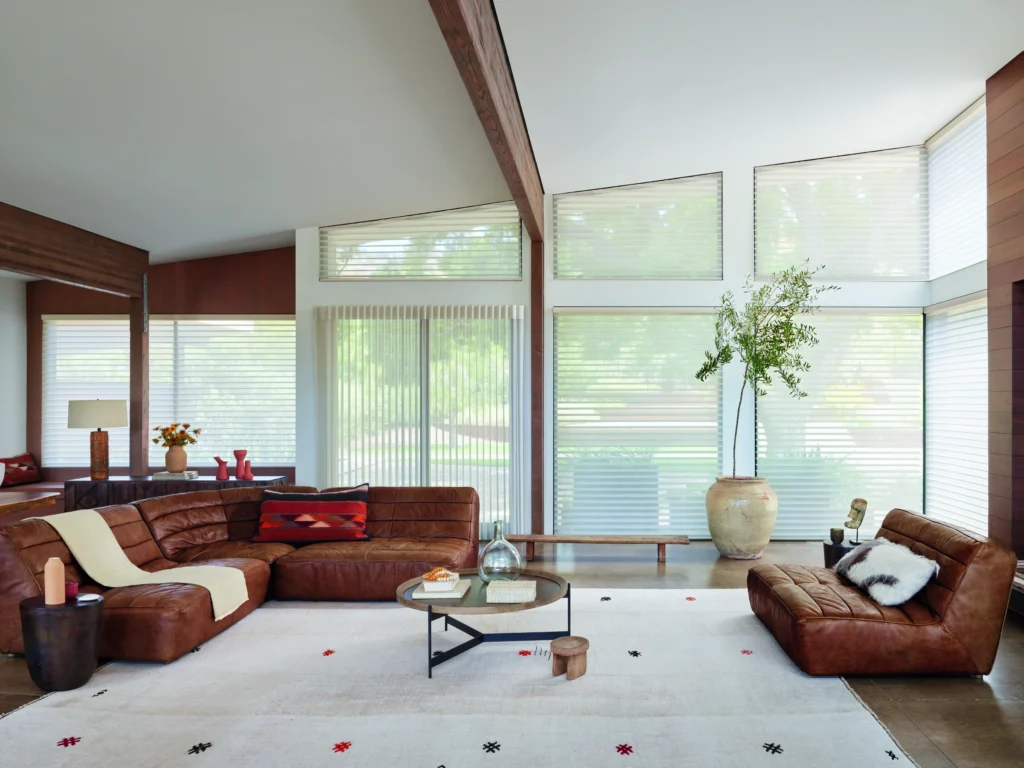
Wood furniture plays a central role in shaping the atmosphere of a home. It influences how light moves across surfaces. It affects how rooms feel connected. It defines how individual pieces relate to one another within a carefully designed interior. Wood tones also contribute to warmth, texture, and visual rhythm across living spaces. Thoughtful placement of wood finishes helps create balance between architectural elements, cabinetry, flooring, and furniture. At BD Home Studio, mixing wood finishes follows a composition strategy. Designers focus on structure, proportion, and visual harmony instead of strict matching rules. This approach creates interiors that feel layered, natural, and intentionally designed.
Many homeowners believe matching every wood finish creates harmony. Uniform finishes often reduce visual interest. Interiors gain character through variation that follows a clear plan. Different tones establish contrast and guide attention across the room. Variation strengthens furniture hierarchy and highlights important design features. Mixed finishes also support transitions between connected spaces and prevent interiors from feeling flat or repetitive.
Successful finish mixing begins with identifying dominant tones within the space. Designers study flooring, cabinetry, trim, and large furniture pieces first. Undertones such as warm amber, neutral brown, or cool gray influence how finishes relate to each other. Balanced contrast creates structure across surfaces and prevents visual clutter. Careful coordination of these elements produces interiors that feel refined, comfortable, and cohesive rather than overly matched.
Breaking the “Matchy-Matchy” Rule in Luxury Interior Design
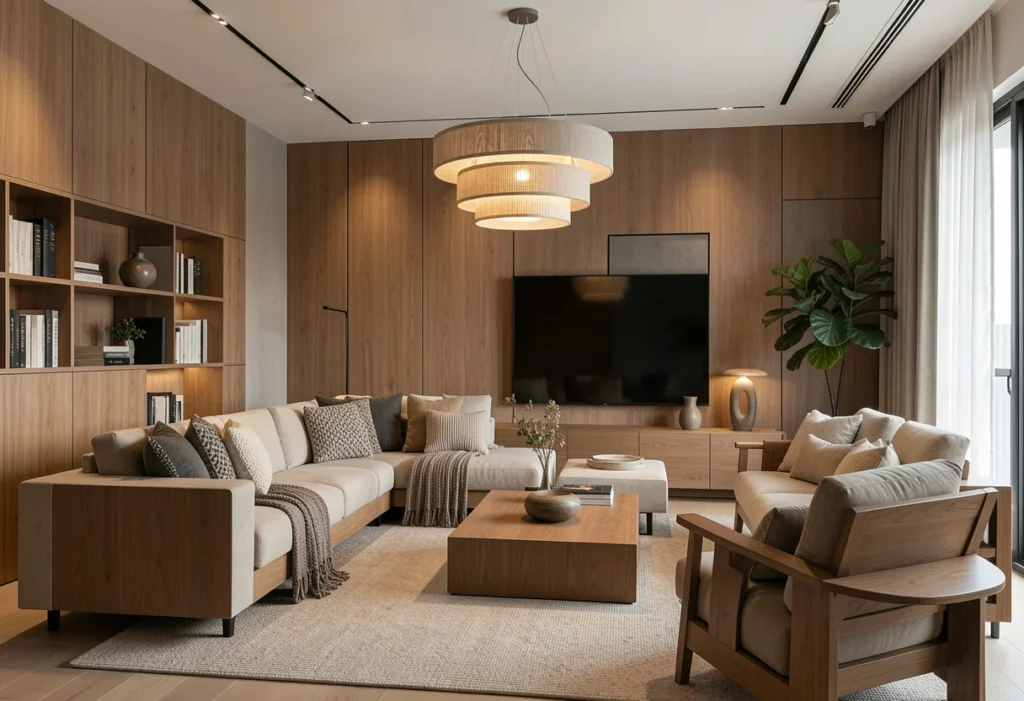
Earlier design traditions often encouraged matching furniture finishes throughout a room. This approach created visual consistency. It often limited opportunities for interiors to express personality and depth. Spaces with identical finishes sometimes appeared formal and predictable. Designers now recognize the value of variation across materials and surfaces.
Contemporary interior design favors layered wood finishes that reflect the natural variation found in architectural materials. Mixing wood tones allows furniture pieces to complement each other instead of repeating the same finish. This approach produces interiors that feel curated and intentional. Designers combine multiple finishes within a space to highlight focal furniture pieces, create visual hierarchy, support transitions between architectural features, introduce warmth and contrast, and connect different functional zones. Harmony comes from proportion, undertone alignment, and material balance rather than identical finishes.
At BD Home Studio, designers evaluate wood selection alongside flooring, cabinetry, rugs, and upholstery. Each finish supports the overall interior composition. This process strengthens visual continuity across the space and creates interiors that feel balanced, layered, and refined.
Step 1: Identify Your Dominant Wood Tone
Every successful mixed-wood interior begins with identifying the tone that anchors the room visually. This dominant surface guides the selection of all supporting finishes and creates a clear foundation for balance across flooring, cabinetry, and furniture.
In many homes, the dominant tone comes from the flooring or the largest furniture piece in the room. Hardwood floors often serve as the primary reference because they cover the largest continuous surface area. When flooring appears neutral, a large dining table, media console, or bed frame can define the visual direction instead. Once the dominant tone is identified, supporting finishes should complement it rather than duplicate it. Intentional variation creates depth and highlights key furniture pieces while preventing interiors from feeling overly uniform. Lighting also plays an important role, since natural daylight can change how wood tones appear throughout the day.
At BD Home Studio, tone identification begins early in the planning process. Designers review flooring, cabinetry, trim, and major furniture pieces first to ensure all finishes remain consistent with the home’s architectural features.
Step 2: Understanding Wood Undertones
Wood finishes contain subtle undertones that influence how surfaces interact visually. These undertones determine whether different finishes feel balanced when placed near each other. Warm woods often show hints of red, orange, or golden brown. Cool woods lean toward gray or taupe influences. Neutral woods sit between these categories and adapt easily across multiple palettes. Recognizing undertones helps prevent combinations that feel visually disconnected even when finishes appear similar at first glance.
Mixing wood finishes works best when undertones remain consistent. Pairing several warm-toned woods creates variation while maintaining visual continuity across the room. Combining warm cherry finishes with cool gray-washed oak without a transition material often creates visual tension. Designers coordinate undertones instead of matching finishes exactly so variation feels intentional and balanced. Supporting materials such as rugs, upholstery, and metal accents help strengthen this alignment across the space. At BD Home Studio, designers evaluate undertones carefully so each furniture piece contributes to a cohesive palette rather than competing for attention.
Step 3: Creating Contrast Rather Than Near-Misses
Contrast introduces clarity between wood surfaces. Without contrast, different finishes can appear unintentionally mismatched instead of deliberately layered. Clear tonal variation allows each furniture piece to maintain its identity while supporting the overall composition of the room. Light white oak pairs well with deeper finishes such as espresso or walnut because the tonal difference creates strong visual separation between surfaces. This separation highlights furniture silhouettes and prevents interiors from appearing flat or repetitive. Darker finishes also anchor larger furniture pieces and strengthen the structure of the layout.
Contrast helps define functional zones within open spaces. A darker dining table placed over lighter flooring naturally establishes the dining area as a focal point. This approach improves visual organization across connected living areas and supports a balanced room layout. Layering finishes through intentional contrast adds depth and maintains visual interest across multiple surfaces. Designers at BD Home Studio introduce contrast gradually so transitions between finishes feel natural and visually comfortable rather than abrupt.
Using Custom Rugs as a Buffer Between Wood Floors and Furniture
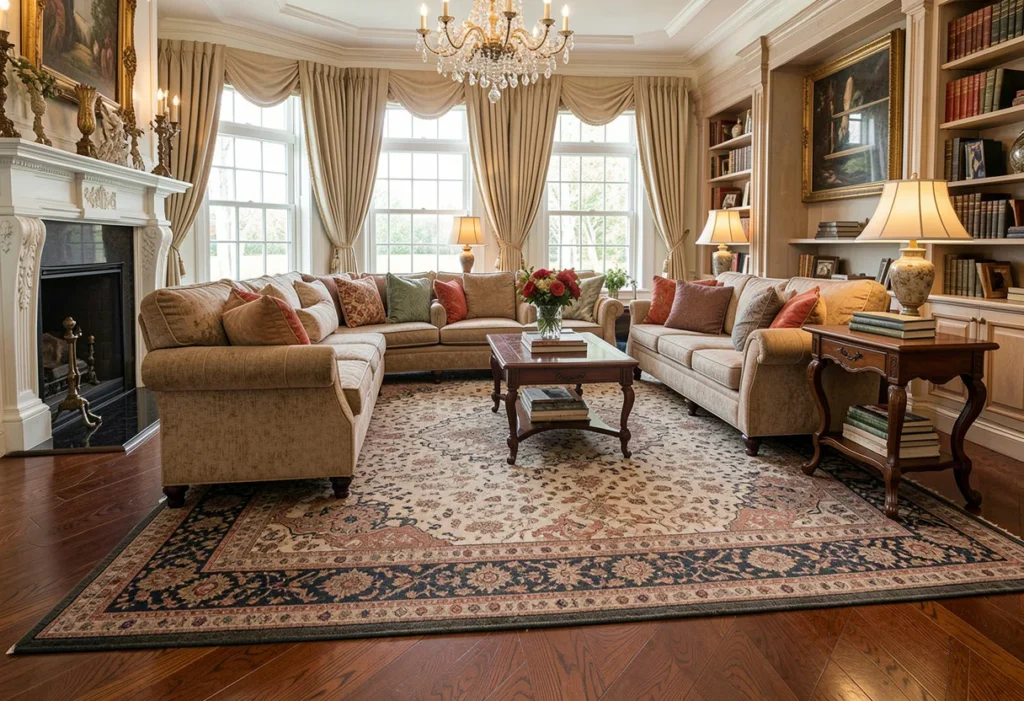
Custom rugs play an important role when mixing wood tones because they create a clear visual transition between flooring and furniture finishes. Rugs soften shifts between surfaces and strengthen seating arrangements and circulation zones. They help organize the room visually and make layered wood finishes feel intentional instead of disconnected. A properly sized rug allows darker furniture to sit comfortably over lighter flooring without creating visual tension. Lighter rugs can soften the presence of darker flooring beneath mid-tone furniture pieces. This balance supports smoother transitions across the space and improves overall composition.
Custom sizing ensures rugs extend far enough beyond furniture edges to define each arrangement clearly. Pattern scale helps connect surrounding finishes and reinforces relationships between wood tones, upholstery, and accent materials. Texture also adds warmth and improves comfort underfoot, which enhances both function and atmosphere. At BD Home Studio, designers integrate rugs early in the planning process. Early placement helps unify multiple wood tones across a room and supports layout clarity from the beginning. This approach creates interiors that feel cohesive, comfortable, and visually balanced from floor to furniture.
Bridging the Gap with Upholstered Pieces and Metal Accents
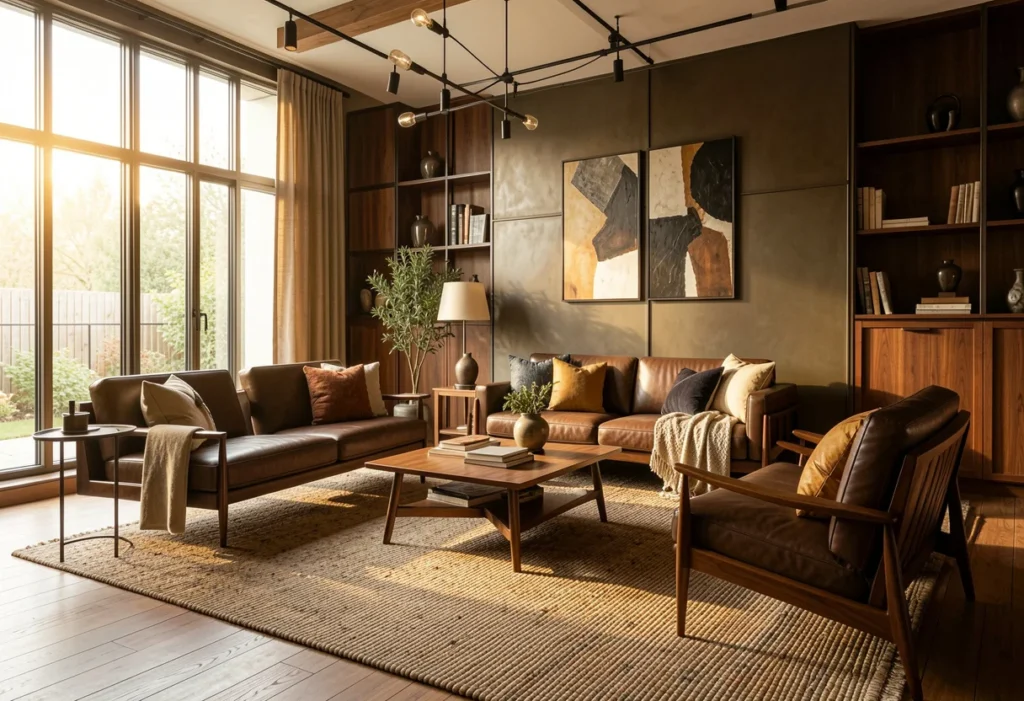
Upholstery and metal finishes help connect different wood tones within the same environment by acting as visual transition elements between surfaces. Fabric seating introduces texture variation that balances the structured appearance of wood furniture and supports a softer, more comfortable atmosphere across the room. Neutral upholstery allows multiple finishes to coexist without visual competition and helps maintain a calm, cohesive palette. Metal accents add contrast while reinforcing undertone consistency across the space. Brushed brass supports warm-toned wood palettes, while matte black introduces structure and definition within contemporary interiors.
Lighting fixtures, cabinet hardware, and decorative accessories carry these metal accents throughout the room and strengthen continuity between furniture pieces and architectural elements. At BD Home Studio, designers select wood finishes, upholstery textures, and metal accents together so each material contributes to a balanced and unified interior composition.
Curate Your Timeless Furniture Collection with Our Experts
Selecting wood furniture that works together across multiple rooms requires careful planning rather than isolated purchasing decisions. BD Home Studio helps homeowners evaluate finishes alongside flooring tones, cabinetry details, and lighting placement before recommending furniture selections, ensuring each piece supports the long-term structure and visual harmony of the home instead of following short-term styling trends. Professional guidance also helps maintain the right balance between contrast and consistency, allowing interiors to feel calm yet layered, while access to curated furniture collections makes it easier to choose materials that match both interior goals and everyday lifestyle needs. With thoughtful planning, mixed wood finishes can create environments that feel refined, comfortable, and cohesive across every room.
Frequently Asked Questions (FAQs)
1. Can different wood furniture finishes be used in the same room?
Different wood furniture finishes can work together successfully when undertones remain compatible and contrast is introduced intentionally. Designers often begin by identifying a dominant tone that anchors the room before adding supporting finishes around it. Rugs and upholstery help create transitions between surfaces so variations appear coordinated rather than disconnected. Lighting conditions also influence how finishes interact visually throughout the day. Selecting finishes with clear tonal differences prevents combinations from appearing accidental. With careful planning, mixed wood finishes strengthen interior character instead of reducing visual harmony.
2. How do I identify the undertone of my existing wood furniture?
Identifying undertones begins by observing whether the surface reflects warm, cool, or neutral color influences. Warm woods typically display hints of red or golden tones, while cooler woods lean toward gray or taupe variations. Neutral finishes sit comfortably between these categories and adapt easily across multiple palettes. Natural daylight often reveals undertones more clearly than artificial lighting. Comparing furniture against white surfaces can also make undertone differences easier to recognize. Once undertones are identified, selecting complementary finishes becomes more predictable and effective.
3. Is it better to match wood furniture with hardwood flooring?
Matching furniture exactly to hardwood flooring is not necessary for creating a cohesive interior. Many designers prefer introducing contrast between flooring and furniture so each surface maintains its own identity. Rugs help soften transitions between finishes while supporting seating arrangements. Undertone compatibility remains more important than exact color matching when coordinating surfaces. Slight variation often produces stronger visual balance than identical finishes across every element. This approach allows rooms to feel layered while still maintaining continuity.
4. What role do rugs play when mixing wood furniture tones?
Rugs help create separation between flooring and furniture finishes so transitions feel intentional. They also define seating zones and support circulation paths within open layouts. Pattern scale and texture variation contribute additional visual balance across multiple wood tones. Custom sizing ensures rugs extend beyond furniture edges appropriately to anchor arrangements. Designers frequently select rugs early in the planning process because they influence how surrounding materials interact. When chosen carefully, rugs help unify the entire room composition.
5. Can metal accents help balance mixed wood finishes?
Metal accents provide visual structure that supports variation between wood finishes. Warm metals such as brass reinforce golden undertones, while darker finishes introduce contrast across contemporary interiors. Lighting fixtures and cabinet hardware often carry these accents throughout the space. Repeating metal finishes across several surfaces strengthens continuity between rooms. Upholstery textures also help soften transitions alongside metal elements. Together, these materials create balance that allows multiple wood tones to coexist comfortably.
Build a Cohesive Interior with Confident Material Pairings
Mixing wood finishes successfully depends on understanding tone relationships, undertone compatibility, and furniture scale, and with the right guidance, variation becomes a design strength rather than a source of uncertainty. BD Home Studio helps homeowners explore wood furniture selections that support architectural structure, lighting conditions, and everyday living patterns across the home, ensuring each piece contributes to a balanced and cohesive interior. With thoughtful planning and expert direction, it becomes easier to shape spaces that feel layered, comfortable, and confidently composed. Schedule a consultation to begin creating interiors that work beautifully together across every room.