The choice between Roman shades and roller shades usually comes down to one question that has nothing to do with fabric: do you want the window to feel soft or do you want it to disappear? Roman shades add texture and weight. Roller shades get out of the way.
Both are good products. Both work in almost any room. The difference shows up in how they look when raised, how much window they cover, what they cost, and how they handle a room that gets hard afternoon sun. This guide covers all of it, so you can decide before a consultation rather than during one.
The short answer
If you want | Choose |
|---|---|
A softer, more tailored look | Roman shades |
Clean lines and minimal visual weight | Roller shades |
Something that reads as furnishing, not hardware | Roman shades |
Maximum glass exposed when raised | Roller shades |
Better feel in a formal or traditional room | Roman shades |
Easier upkeep in a kitchen or bath | Roller shades |
The lower price on a large window | Roller shades |
Layering under drapery | Either, though Roman adds more bulk |
If you take nothing else from this: roller shades are the practical default and Roman shades are the design choice. Neither of those is a criticism.
What a roller shade actually is
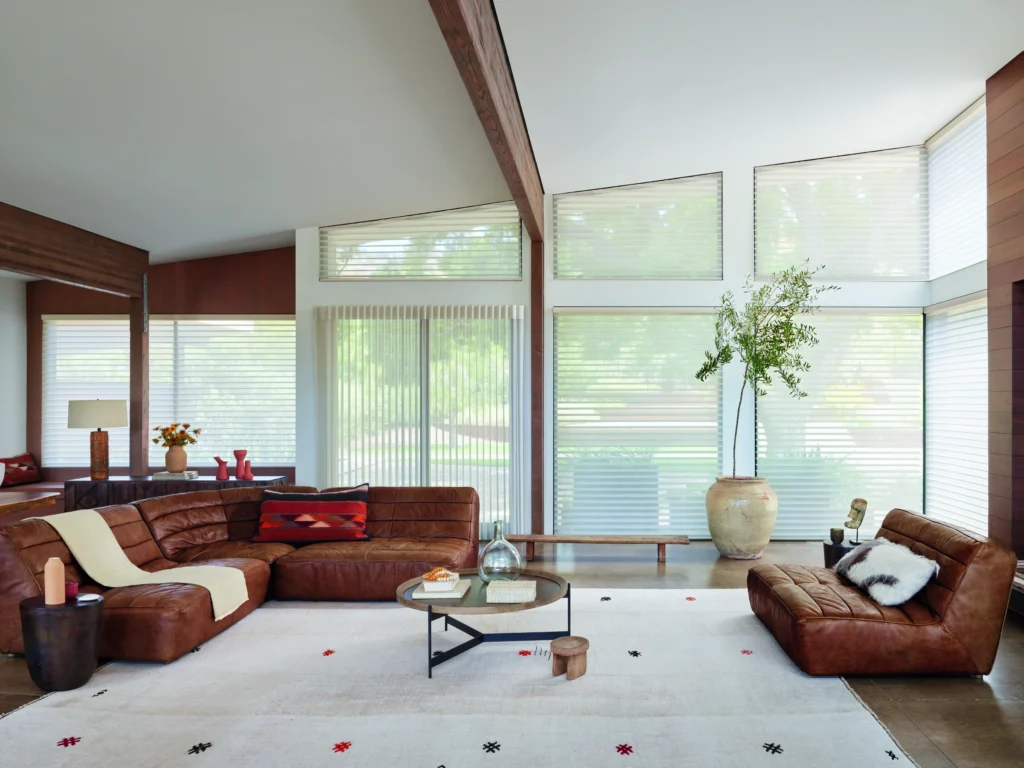
A roller shade is a single piece of fabric wound around a tube at the top of the window. Pull it down and it covers the glass. Raise it and the whole thing rolls up into a few inches of cassette or an exposed tube.
The Department of Energy describes them plainly in its guidance on energy efficient window coverings: roller shades are raised or lowered from a roller bar fitted at the top of the window. That simplicity is the point. Fewer parts, less fabric, less to go wrong.
Fabric choice does most of the work here. Openness factor, meaning how tightly the weave is constructed, decides whether you get a view through the shade or not. A 5 percent openness solar shade cuts glare while letting you see the yard. A blackout roller shade stops light almost entirely. Same mechanism, completely different result.
Where roller shades work best
Kitchens, bathrooms, home offices, media rooms, and any window where you want the glass back when the shade is up. They suit modern and transitional interiors, and they layer well under drapery because they take up so little room at the top of the window.
What a Roman shade actually is
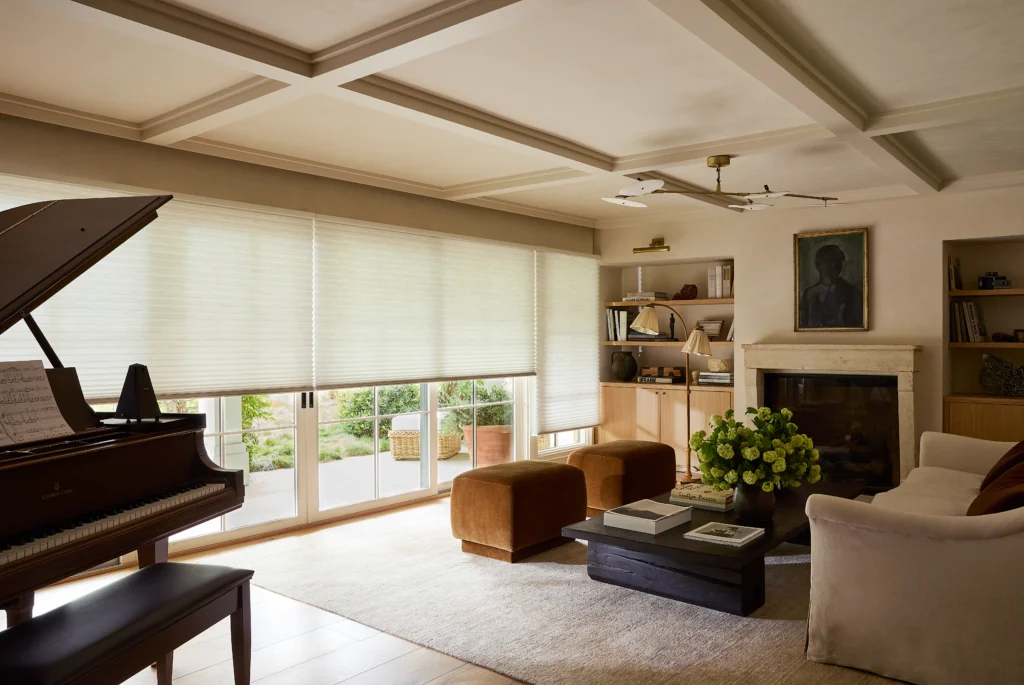
A Roman shade is fabric that folds into stacked horizontal pleats as it rises, rather than rolling. The DOE describes them as fabric shades drawn up into a series of evenly stacked folds.
That stack is the whole character of the product. When raised, a Roman shade leaves a band of folded fabric across the top of the window, usually six to twelve inches deep depending on the window height and the fold style. Some people love that. Others see it as lost glass.
Fold style changes the look considerably. Flat Roman shades give you clean, tailored panels. Relaxed or hobbled styles add softness and traditional weight. The fabric behaves like upholstery rather than a mechanism, which is why Roman shades tend to suit rooms where the windows are meant to be noticed.
Where Roman shades work bes
Living rooms, dining rooms, bedrooms and any space where the window treatment is part of the decorating scheme rather than a utility. They also handle awkward architectural windows gracefully, because fabric forgives irregularity in a way a rigid roller tube does not.
Comparing them properly
Roller shades | Roman shades | |
|---|---|---|
Look when raised | Nearly invisible, small cassette | Visible stack of folded fabric |
Glass exposed when raised | Almost all of it | Six to twelve inches covered |
Style fit | Modern, transitional, minimal | Traditional, formal, layered |
Fabric feel | Flat, technical, engineered | Soft, textural, upholstered |
Typical cost | Lower | Higher, more fabric and labor |
Cleaning | Wipe down, simple | Vacuum or professional clean |
Best in wet rooms | Yes, especially vinyl or solar fabrics | Less suitable, fabric holds moisture |
Blackout capability | Excellent with the right fabric and side channels | Good, though light leaks at fold edges |
Layering under drapery | Very good, minimal bulk | Good, adds more depth |
Motorization | Straightforward | Available, slightly more complex |
Light control and privacy
This is where most people actually decide, and the two products behave differently.
Roller shades give you precise control through fabric selection. Solar fabrics preserve the view while cutting glare and UV. Light filtering fabrics diffuse without transparency. Blackout fabrics, particularly when paired with side channels, get a room genuinely dark. Because the fabric sits flat against the window, blackout roller shades outperform almost anything else for a bedroom or media room.
Roman shades filter light beautifully but leak a little at the fold edges, even with blackout lining. In a bedroom that needs full darkness for a shift worker or a nursery, that matters. In most bedrooms it does not.
One practical note about privacy that gets missed: a light filtering fabric that gives you privacy during the day can silhouette you at night when the interior lights are on and it is dark outside. If a window faces the street, ask specifically about nighttime privacy rather than daytime.
Energy performance, honestly
Window treatment marketing tends to overstate this, so here is the accurate version. The DOE is clear that roller and Roman shades offer only a small amount of insulation, and that both are most effective for privacy, room darkening and blocking sunlight. Heavier fabrics offer slightly better thermal performance, but neither product competes with cellular shades on insulation.
That does not make them a poor choice. In Northern Virginia, the bigger seasonal problem for most homes is summer solar heat gain through south and west facing glass, and a solar roller shade handles that well. If insulation against winter heat loss is your main objective, that is a different conversation and worth raising at consultation.
Fitting matters more than most people expect. A shade mounted close to the glass and running to the sill traps a layer of still air and performs measurably better than one with gaps around the edges.
Cord safety and what changed in 2024
This is worth knowing before you order anything, particularly if you have young children or grandchildren visiting.
The window covering industry operates under ANSI/WCMA A100.1, and a revised version took effect on 1 June 2024. According to the Window Covering Safety Council, the revised standard eliminates free hanging operating cords, free hanging tilt cords and multiple cords into a cord connector on all made-to-order custom window covering products.
That is a meaningful change, because custom made-to-order products are exactly what a design studio supplies. In practice it means most custom shades sold now are cordless, motorized, or use inaccessible or short helper cords rather than a loose pull cord.
The CPSC has been urging consumers to go cordless for years, particularly in homes where children live or visit. If you have older corded shades elsewhere in the house, replacing them is worth doing at the same time as any new order.
What each one costs
Roman shades cost more than roller shades on the same window, and the reason is straightforward: more fabric, more construction, more labor. A Roman shade is a sewn product. A roller shade is a fabricated one.
The gap widens as windows get larger, because fabric consumption on a Roman shade scales with height in a way roller fabric does not. On a run of tall windows in a living room, that difference adds up quickly.
Where the maths shifts is on very wide windows. Roller shades have practical width limits before the fabric starts to telescope or the tube deflects, so a very wide opening may need two or three shades on one window. Roman shades face similar constraints. Either way, wide windows usually mean multiple units, and that is a measuring conversation rather than a product one.
Motorization
Both products motorize, and it is worth considering for any window that is hard to reach, behind furniture, or above a stairwell.
Roller shades are the simpler motorization, since a motor inside the tube is close to how the product already works. Roman shades motorize too, with the lift mechanism handling the fold stack.
Motorization also solves the cord question completely, which is why it has become the standard recommendation for tall windows and for homes with small children. We work with Hunter Douglas and Alta Window Fashions, and both offer motorized systems across their shade lines.
Inside mount or outside mount
A detail that changes the look more than people expect.
An inside mount sits within the window frame, showing the trim and giving a clean, built-in appearance. It requires enough depth in the frame, and the window needs to be reasonably square, since gaps show.
An outside mount sits on or above the trim and covers the whole opening. It hides an out of square window, blocks more light at the edges, and makes a window look larger. For blackout applications, outside mount almost always performs better.
This is one of the reasons professional measuring matters. The difference between a shade that looks tailored and one that looks approximate is usually a quarter inch decision made at measuring stage.
How to decide
Work through these in order and the answer usually appears:
- Start with the room’s job. A media room needs darkness. A kitchen needs wipeable. A dining room needs to look considered.
- Look at the window when the shade is up, not down. Roman shades keep a band of fabric across the top permanently. Decide now whether that bothers you.
- Check the sun. South and west facing windows in Northern Virginia take real afternoon heat and glare. Solar roller fabrics are built for that.
- Think about what else is going on the window. If drapery is part of the plan, roller shades disappear underneath more cleanly.
- Consider who is in the house. Cordless or motorized is the right answer where children live or visit.
- Handle the fabric in person. Openness factor, weave and color read completely differently in your own light than on a screen.
If you are still torn, a common and genuinely good solution is to mix them: roller shades in the working rooms, Roman shades in the rooms you entertain in. There is no rule requiring one product throughout a house.
Frequently asked questions
Are Roman shades or roller shades better for a bedroom?
Both work. Roller shades with a blackout fabric and side channels get a bedroom darker, which matters if you are a light sleeper or work shifts. Roman shades look softer and warmer, and handle a decorative bedroom better. If total darkness is not essential, choose on appearance.
Do Roman shades block more light than roller shades?
Not usually. Roman shades filter light attractively, but the folds allow small amounts of light through at the edges even with blackout lining. A flat blackout roller shade sits closer to the glass and blocks light more completely.
Which is easier to clean?
Roller shades. Most wipe down with a damp cloth, and vinyl and solar fabrics handle kitchen and bathroom conditions well. Roman shades are fabric and generally need vacuuming with a brush attachment or professional cleaning.
Are Roman shades worth the extra cost?
They are when the window is part of the room’s design rather than just a light source. In a living room, dining room or primary bedroom, the softness and texture do real work. In a laundry room or a home office, the money is better spent elsewhere.
Can you put Roman or roller shades under curtains?
Yes, and layering is common in Northern Virginia homes. Roller shades layer more cleanly because they take up almost no depth at the top of the window. Roman shades work too, adding more visual weight, which can be the desired effect.
Are custom shades cordless now?
Largely, yes. The revised ANSI/WCMA A100.1 standard that took effect in June 2024 eliminated free hanging operating cords on made-to-order custom window coverings, so most custom shades are now cordless, motorized or use inaccessible or short helper cords.
Choosing between Roman shades and roller shades for your home
The honest summary is that roller shades solve problems and Roman shades create atmosphere. Most homes end up wanting both, in different rooms, and there is nothing inconsistent about that.
What settles it faster than any comparison chart is handling the fabrics in the room they are going into, at the time of day the room actually gets used. Openness factor, weave and fold style all read differently in person.
We supply and install both across Fairfax and Northern Virginia, working with Hunter Douglas and Alta Window Fashions. You can see the full range on our custom shades and blinds page, or explore layered options on our custom window treatments page.
If you would rather see materials in your own light before deciding, book a free consultation and we will bring samples to you. You can also browse finished rooms in our inspiration gallery, or get in touch with a specific window in mind.