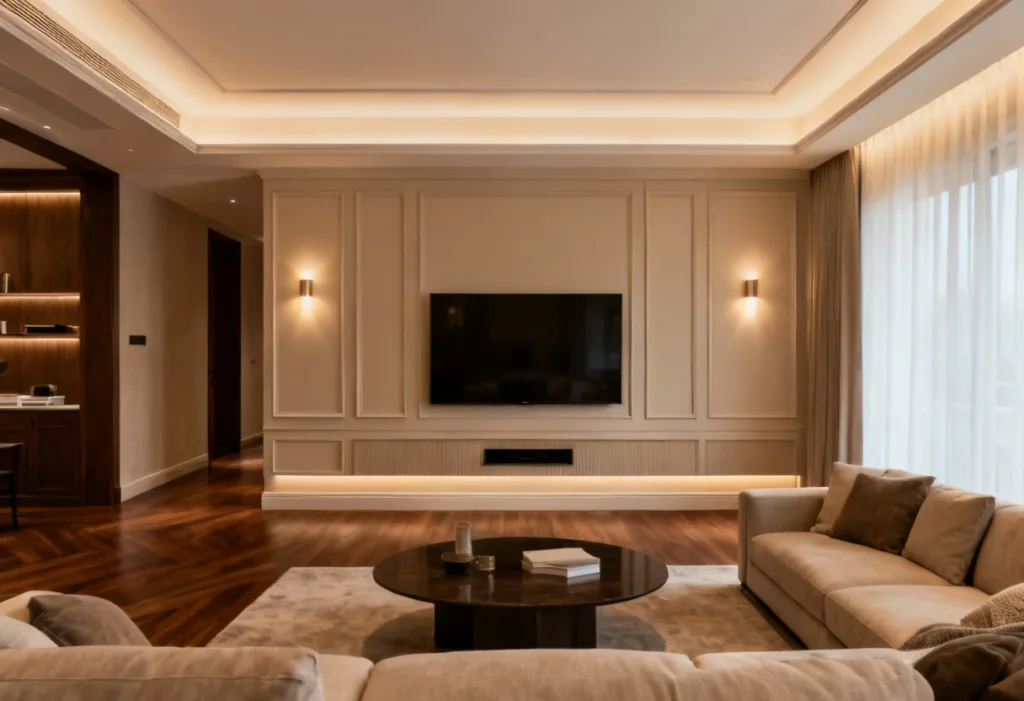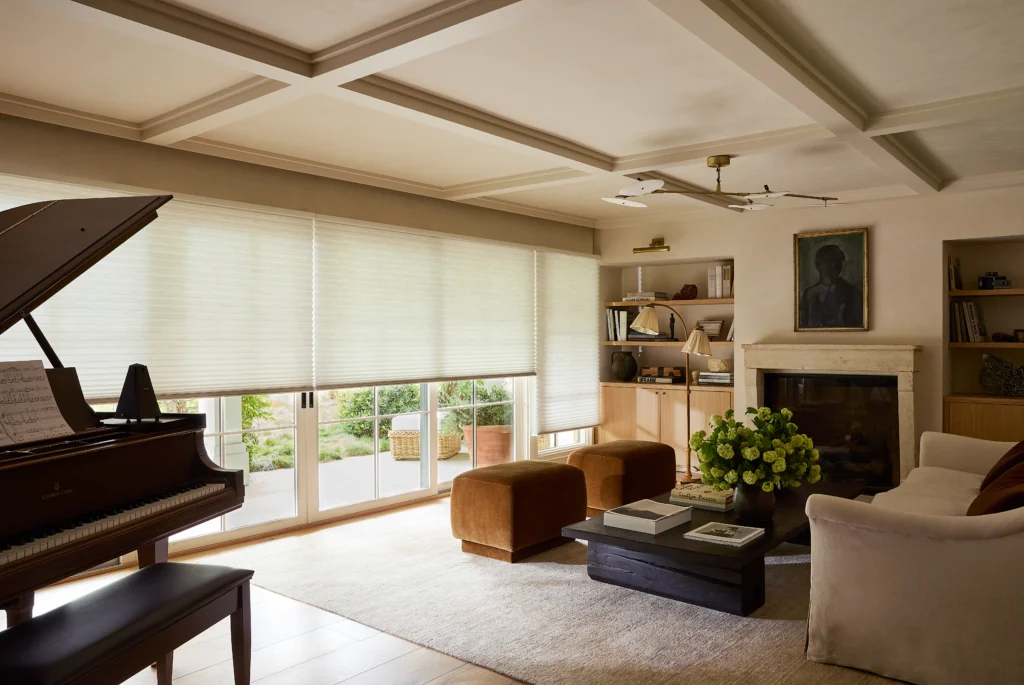
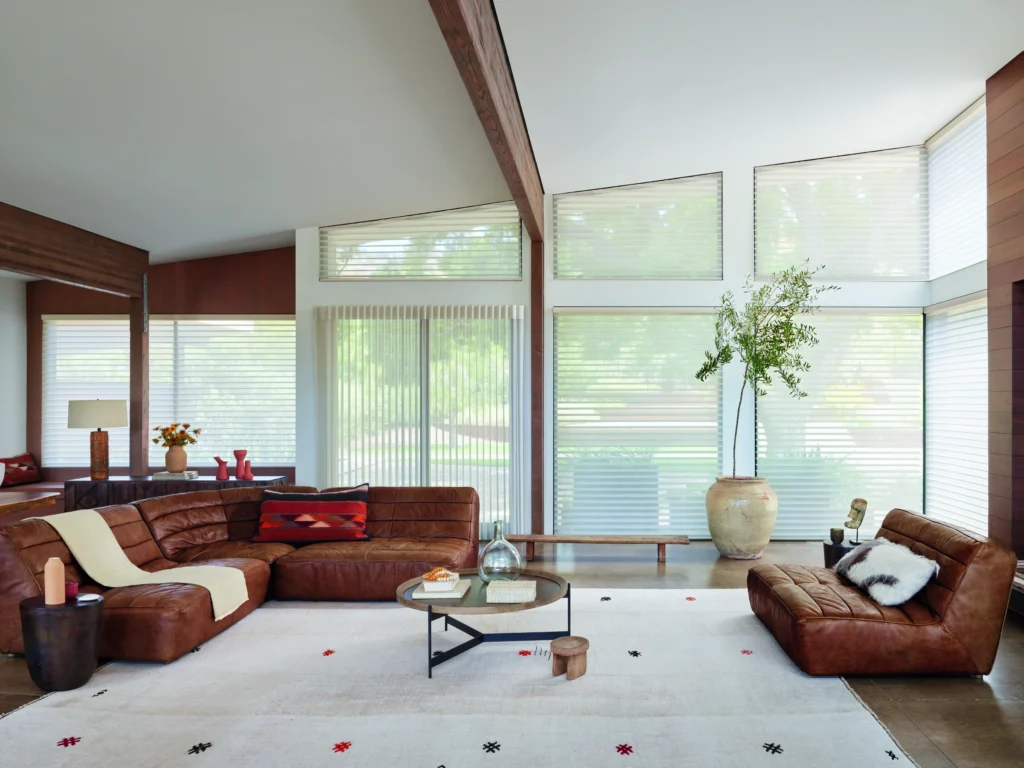
Custom rugs play a defining role in open floor plans where walls no longer separate living, dining, and transitional spaces. Instead of fixed boundaries, rugs become the visual anchors that organize the home. When chosen thoughtfully, they establish structure, guide movement, and bring harmony across connected zones without disrupting the openness of the layout.
At BD Home Studio, rugs are treated as foundational design elements rather than decorative accessories. Each piece is selected or crafted to align with furniture placement, architectural flow, lighting direction, and material palettes throughout the home. The goal is not simply decoration, it is spatial clarity with visual rhythm.
This blog explores how to mix and match rugs successfully in open layouts while maintaining cohesion, balance, and design intention.
The Role of Rugs in Open-Concept Living: Defining Zones
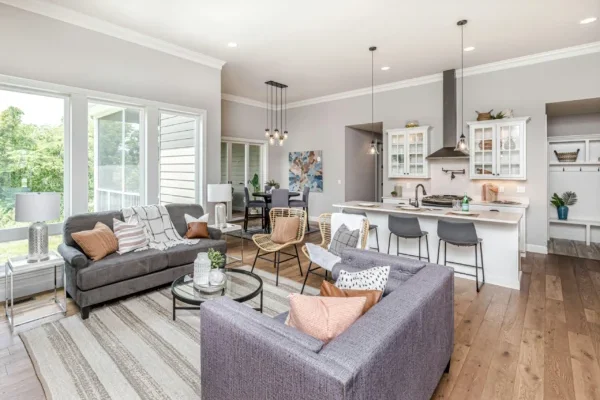
Open-concept homes remove physical barriers between functional spaces, creating one continuous environment for living, dining, and entertaining. While this layout enhances connection and flow, it can also blur the visual boundaries between areas and make it harder to clearly define each space. Rugs solve this challenge by acting as subtle boundaries. Instead of walls, texture and scale determine where one zone ends and another begins. A living area rug frames seating arrangements, a dining rug anchors the table, and smaller transitional rugs guide movement between spaces.
Beyond zoning, rugs influence acoustics and comfort. Hard flooring can amplify sound in large rooms, while rugs soften footsteps and reduce echo. They also introduce warmth underfoot, balancing the visual weight of furniture and architectural finishes.
BD Home Studio often uses rug placement as the starting point for spatial planning in open layouts, ensuring that each zone feels distinct but still connected.
Rule #1: Don’t Match, Coordinate
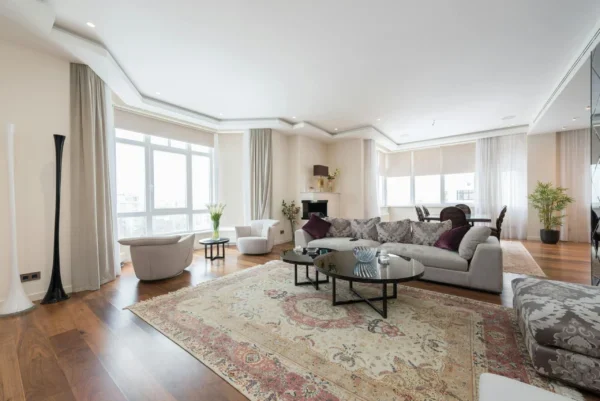
One of the most common mistakes in open floor plan styling is choosing rugs that match too closely. When every rug shares identical patterns, colors, or textures, the space can feel repetitive, flat, and visually disconnected from its purpose.
Instead, coordination creates depth and balance across the entire layout. Rugs should share a common design language, such as complementary tones, similar undertones, or consistent texture weight, while still expressing individuality in each zone. This allows living, dining, and transitional areas to feel distinct without breaking visual harmony.
This approach helps each area develop its own identity while still contributing to a unified overall design, making the open-concept space feel intentional, layered, and more visually dynamic.
Establishing a Dominant Color Palette
A successful rug arrangement begins with a unified color direction, where all pieces relate back to a shared palette rather than matching exactly. This creates harmony across an open-concept space while still allowing each area to feel distinct and purposeful.
For example, a home may use warm neutrals as the base, supported by muted earth tones and subtle accent colors. One rug might lean into soft taupe to ground a living area, another into warm ivory with deeper contrast to define a seating zone, and a third into muted terracotta accents to bring warmth into a dining or transitional space.
By keeping colors within the same family, the overall layout feels cohesive, layered, and visually connected, while still giving each zone its own character and definition.
The 60-30-10 Color Rule Applied to Rugs
The 60-30-10 design principle can also guide rug selection in open layouts by creating balance and visual structure across connected spaces.
- 60% dominant tone is used across the largest rug or primary living zone, setting the overall foundation for the space and anchoring the main area visually.
- 30% secondary tone is introduced through dining or secondary seating areas, adding variation while still maintaining harmony with the dominant palette.
- 10% accent tone is used sparingly in smaller rugs or transitional pieces, providing contrast and subtle visual interest without overwhelming the design.
This structured balance ensures that no single rug dominates the composition while still allowing each zone to feel distinct and intentional. It creates flow between areas while maintaining clear visual organization across the entire open-concept layout.
BD Home Studio often applies this structure when curating rug collections for large, connected interiors, helping ensure cohesive styling that feels both layered and thoughtfully composed.
Mixing Patterns and Textures Successfully
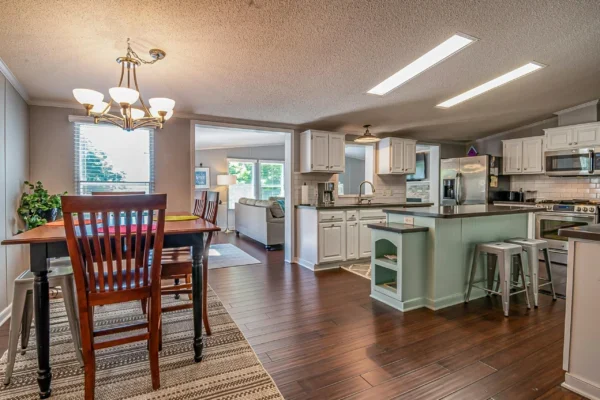
Pattern and texture add personality, depth, and visual interest to a space, but in open layouts designers must coordinate them intentionally to avoid visual overload or competing design elements.
Because multiple zones are visible at once, every choice contributes to the overall atmosphere of the home. The goal is contrast without conflict, creating variety between rugs, materials, and finishes while maintaining a sense of cohesion across the entire space.
When designers balance patterns, textures, and tones properly, they create areas that feel distinct yet still connected, resulting in an interior that feels layered, harmonious, and visually unified.
Pairing a Bold Pattern with a Subtle Solid
When one rug features a strong pattern, surrounding rugs should remain more restrained to maintain visual balance across the space. A bold geometric or expressive design can act as a focal point in a living area, drawing attention and defining the main seating zone.
Supporting rugs in dining areas, hallways, or adjacent zones should stay neutral to avoid visual competition. This contrast allows the patterned rug to stand out clearly while simpler pieces reinforce structure and flow throughout the layout. The result is a space that feels intentional, organized, and visually calm despite variation in design elements.
Combining Different Textures (e.g., Silk Blend with Chunky Wool)
Texture variation adds depth and dimension even when the color palette remains consistent across the home. A silk-blend rug introduces softness and a subtle reflective sheen, creating a lighter and more refined visual effect under changing light. In contrast, chunky wool brings weight, warmth, and a more grounded tactile presence.
When used together, these differences create layered interest that enhances the overall atmosphere of open spaces. The key is maintaining tonal harmony so texture becomes the main source of contrast rather than color variation. BD Home Studio often applies this approach to prevent visual monotony in large interiors, especially where natural light shifts throughout the day and changes how materials are perceived.
Using Geometric Shapes vs. Organic Motifs
Shape plays an important role in rug coordination because it influences how movement and structure are perceived in open layouts. Geometric patterns introduce order, symmetry, and a sense of architectural clarity, while organic motifs bring softness, flow, and a more natural visual rhythm.
When combined thoughtfully, these contrasting shapes help define different functional zones within a shared space. A geometric rug can anchor a living room seating arrangement and reinforce structure, while an organic-patterned rug can soften a reading nook or secondary lounge area. This interplay guides visual movement across the home without disrupting cohesion, creating a balanced environment that feels both dynamic and unified.
Getting the Proportions Right with Custom Sizing
Even the most beautiful rug loses impact if the proportions are incorrect, especially in open floor plans where every piece contributes to the overall visual structure of the space. When a rug is too small, it can make furniture feel disconnected and floating, leaving the area visually incomplete. When it is too large or poorly placed, it can overwhelm the layout and disrupt balance across adjoining zones.
Proper sizing determines whether each zone feels grounded and intentional or disconnected and unfinished, shaping how the entire room is perceived. In open-concept interiors, accurate proportions help define living, dining, and transitional areas while maintaining flow and cohesion. The right rug scale anchors furniture, supports spatial clarity, and ensures each section of the home feels purposefully designed rather than randomly arranged.
Sizing for the Living Area (Front Legs vs. All Legs on the Rug)
In living spaces, rug size should relate directly to furniture placement because this relationship defines the overall balance of the seating area.
Front-legs-on-rug layout:
This approach places only the front legs of sofas and chairs on the rug, helping anchor the seating zone while keeping the space visually open. It works well in moderate-sized rooms where maintaining airflow and openness is important, while still providing enough definition for the living area.
All-legs-on-rug layout:
This method positions the entire seating arrangement on the rug, creating a more enclosed and grounded feel. It is best suited for larger rooms where the rug can fully support the furniture grouping without making the space feel crowded.
Custom sizing ensures that furniture fits comfortably within the rug boundary, avoiding awkward spacing, overcrowding, or excessive exposed flooring that can disrupt visual harmony.
Sizing for the Dining Area (Accounting for Chair Pull-Out)
Dining room rugs require careful measurement because chair movement changes how the space is used throughout the day. A properly sized rug should extend beyond the table on all sides to allow chairs to slide in and out smoothly without catching on the edges. This extra allowance prevents uneven wear on rug borders and maintains visual balance even when the dining area is actively in use. In open layouts, correct sizing also ensures the dining zone feels grounded and clearly defined rather than visually floating within the larger space.
BD Home Studio customizes rug dimensions based on actual furniture measurements rather than relying on standard sizing alone, ensuring each zone is accurately scaled for both function and design cohesion.
Creating Visual Flow and Pathways Between Rugs
In open-concept homes, rugs should not feel isolated from one another. Instead, they should guide movement through the space. Visual flow is achieved through repetition of subtle design elements, whether that is a shared color undertone, recurring texture, or similar pattern scale. These connections help the eye travel naturally from one zone to the next.
Pathways between rugs also matter. Leaving intentional negative space between zones prevents overcrowding and allows each area to breathe. This spacing creates rhythm, much like pauses in music. Lighting also supports flow. When overhead lighting aligns with rug placement, each zone feels anchored without becoming visually disconnected from the rest of the home.
BD Home Studio often maps rug placement alongside furniture and lighting layouts to ensure every transition feels seamless.
Designing Your Cohesive Custom Rug Collection with Us
A well-designed open floor plan does not rely on individual statement pieces alone. It depends on how those pieces interact. Rugs serve as the foundation for that interaction, shaping how each space feels and functions. At BD Home Studio, custom rugs are developed with the entire floor plan in mind. Material selection, pattern coordination, sizing, and placement are all considered together rather than separately. This ensures that each rug contributes to a larger design narrative while still maintaining its own identity. Whether the goal is subtle harmony or expressive contrast, the right rug strategy can transform an open layout into a structured and inviting environment.
Frequently Asked Questions (FAQs)
1. How many rugs should I use in an open floor plan?
The number of rugs depends on how many functional zones exist within the space. Most open layouts include at least two to three rugs, typically covering the living area, dining area, and sometimes a reading or entry zone. Each rug should define a distinct function while still relating to the overall design palette. Overcrowding the space with too many rugs can reduce clarity and disrupt flow. Designers often prioritize fewer, well-proportioned rugs rather than excessive layering. Proper spacing between rugs is equally important to maintain visual balance. The goal is structure without fragmentation.
2. Should rugs in an open space match or differ from each other?
Rugs should coordinate rather than match exactly. Matching rugs can make the space feel repetitive and visually flat. Coordinated designs share common tones, textures, or design language while still expressing individual character. This allows each zone to feel distinct without breaking cohesion. For example, a bold patterned rug in the living area can be balanced with a more neutral dining rug. Subtle variations in texture or tone help maintain continuity. The result is a layered but unified interior composition.
3. What is the best rug size for open living rooms?
The ideal rug size depends on furniture layout and room proportions. In most living areas, rugs should either accommodate all furniture legs or at least the front legs of seating pieces. Larger rugs help anchor the space and prevent furniture from appearing disconnected. Custom sizing is often recommended for open layouts to ensure precise alignment with seating arrangements. Leaving too much floor exposed can make the space feel fragmented. A properly sized rug creates a grounded and cohesive seating zone. Designers often measure furniture first before selecting rug dimensions.
4. Can different rug textures be used in the same space?
Yes, mixing rug textures is an effective way to add depth to open floor plans. For example, a soft silk-blend rug can be paired with a more structured wool rug in another zone. The key is maintaining tonal harmony so texture becomes the primary point of contrast. Varying textures help differentiate functional areas without relying solely on color changes. This approach adds subtle complexity to the overall design. However, excessive variation can create visual noise if not carefully balanced. Designers often limit texture differences to two or three complementary styles.
5. How does BD Home Studio design custom rug layouts for open spaces?
BD Home Studio begins by analyzing the full floor plan, including furniture placement, lighting, and traffic flow. Each functional zone is identified before rug selection begins. Designers then develop a coordinated palette that connects all rugs through shared tones or materials. Custom sizing ensures each rug fits its designated area precisely. Samples are reviewed within the actual space to evaluate color and texture under natural light. Placement is mapped to maintain visual flow between zones. The result is a cohesive rug strategy tailored to both function and aesthetics.
Build a Balanced Home with Thoughtfully Designed Rug Combinations
Custom rugs offer more than surface comfort, they define how space is experienced. In open floor plans, they provide structure, guide movement, and create visual rhythm across connected rooms. BD Home Studio approaches rug design as part of a complete spatial strategy, ensuring that every piece supports both function and aesthetics. From color coordination to precise sizing, each decision contributes to a cohesive interior experience.
If your home features an open layout, a curated rug plan can bring clarity and character to every zone. A design consultation can help you build a custom rug collection that feels unified, intentional, and aligned with your lifestyle.
 info@bdhomestudio.com
 9560 Blenheim Blvd, Fairfax, VA 22031
  +1 571 470 9440