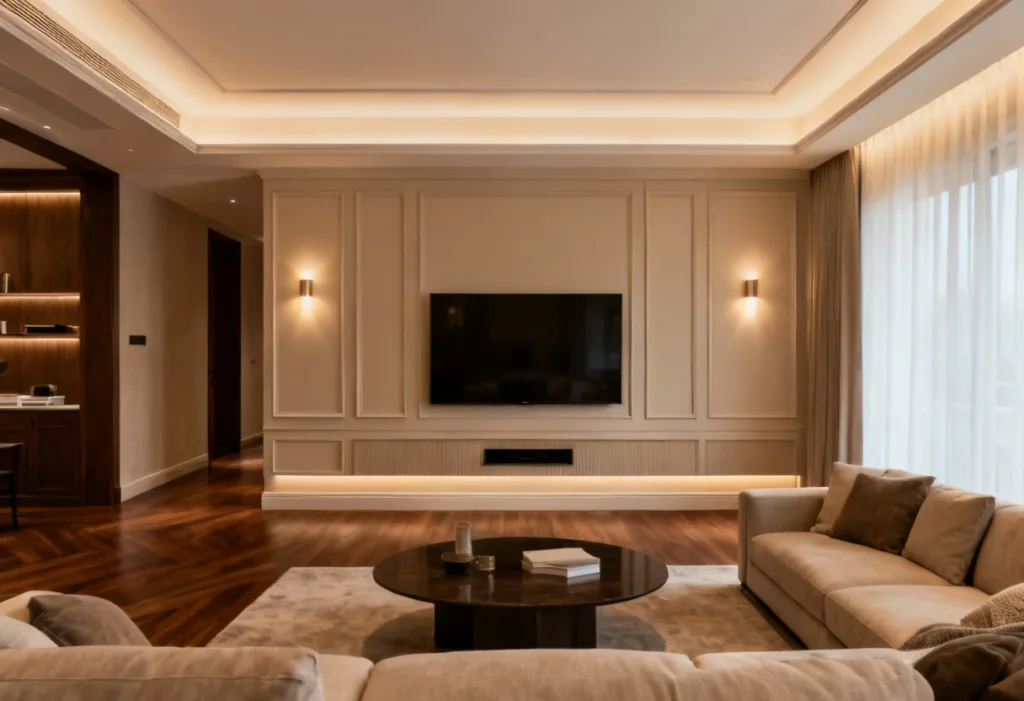
Wall panels designed for TV media walls are transforming how living rooms function and feel. Many homeowners now choose integrated panel systems instead of freestanding furniture and exposed wiring. These systems create a cleaner layout and a stronger visual focal point. A well-designed media wall supports comfortable viewing. It improves sound clarity, strengthens the visual structure of the room, and helps organize storage, lighting, and display elements in one cohesive surface.
At BD Home Studio, designers treat media walls as permanent interior features. They plan panel selection with care, position lighting with intention, and align shelving for balance and accessibility. They consider acoustic performance during early design stages. This process ensures the television area reflects the overall design language of the home. The result feels structured, refined, and visually consistent across the space.
This guide explains how decorative panel systems shape modern media walls. It shows how thoughtful planning improves both performance and appearance. It also highlights practical design decisions that support comfort, organization, and long-term visual appeal.
Goodbye to Bulky TV Stands: The Rise of the Integrated Media Wall
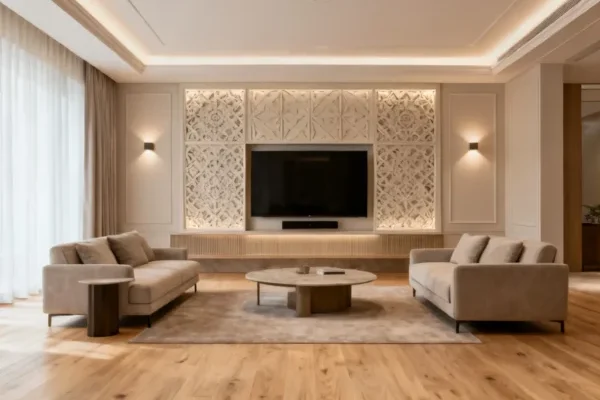
Traditional television setups relied heavily on large furniture pieces placed against blank walls. These arrangements provided basic function, but they often left visible cords, uneven proportions, and limited storage flexibility that disrupted the overall appearance of the living room. Today, integrated TV media walls replace this approach with structured panel systems that frame the television as part of the architectural composition rather than as a separate object. The screen becomes one element within a layered arrangement that includes shelving, lighting, and textured surfaces, creating cleaner visual organization, concealed wiring pathways, improved viewing comfort, coordinated storage solutions, and stronger alignment with surrounding finishes.
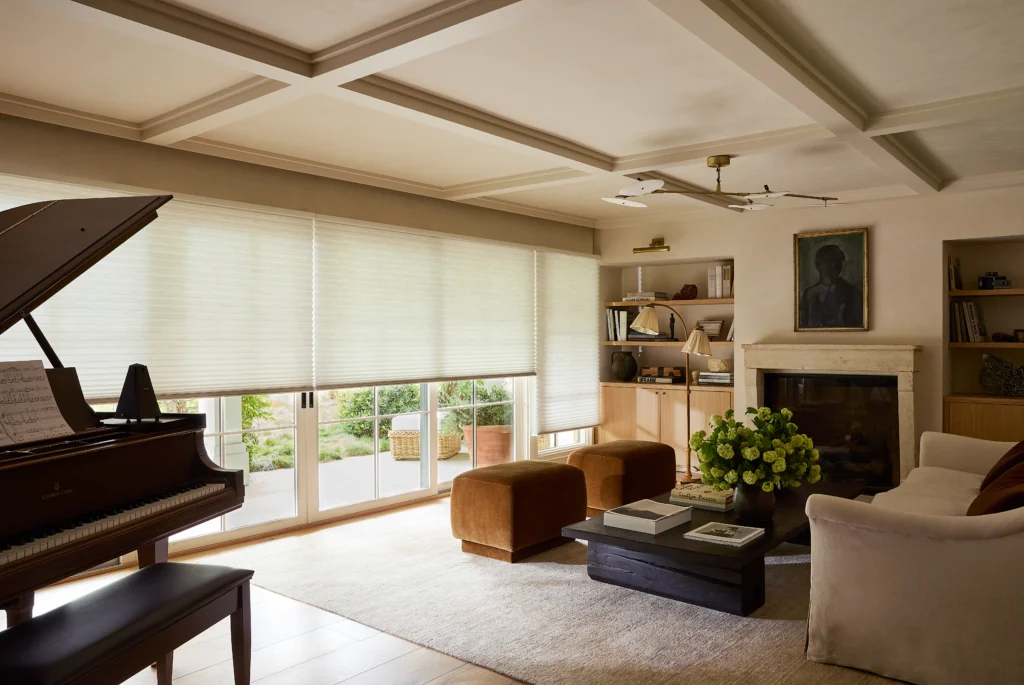
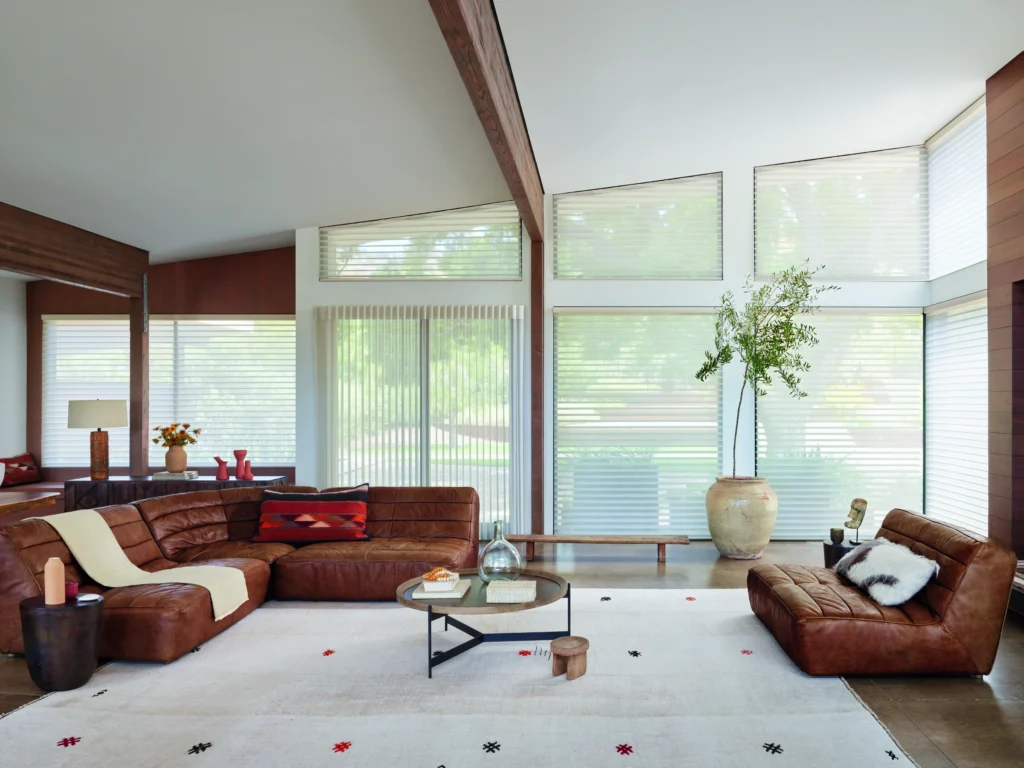
Media walls also allow designers to scale the television area appropriately for the size of the room. In larger living spaces, panel installations introduce enough visual weight to balance the screen and prevent it from appearing undersized. In smaller interiors, streamlined panel layouts maintain clarity and structure without overcrowding the wall surface. At BD Home Studio, designers often coordinate media wall panel systems with window treatments, rugs, and upholstered seating selections to ensure the television area supports the broader spatial composition and contributes to a cohesive, well-balanced living environment.
Why Decorative Panels are the Perfect Backdrop for Your TV
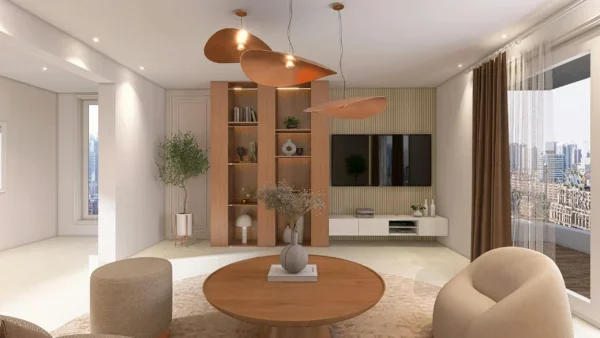
Decorative panels transform the wall behind a television into a focal surface instead of leaving it as a blank background. They introduce texture, depth, and structure that help anchor the screen visually within the room. This added dimension improves visual balance across the wall and supports more comfortable viewing by reducing the stark contrast that often occurs between a flat wall and a mounted display. Over time, the media wall becomes a defining feature of the living space rather than a purely functional installation.
Panel systems can also be tailored to complement flooring tones, cabinetry finishes, and furniture materials already present in the room. Designers can align panel color, texture, and layout with surrounding elements to create continuity across surfaces. This coordination helps the media wall feel intentional and integrated into the overall interior composition rather than something added after the main design decisions were completed. The result is a more cohesive space that feels refined, balanced, and visually complete.
Concealing Cords, Wires, and AV Equipment Flawlessly
Visible cables can disrupt the appearance of even the most carefully designed living room, especially around a television where multiple connections often meet in one area. Decorative panel systems help solve this issue by routing wiring behind structured surfaces and keeping the viewing zone visually clean and organized. Hidden channels within panel assemblies provide dedicated space for HDMI cables, sound system wiring, power connections, streaming equipment, and control hubs, allowing technology to remain accessible without becoming part of the visible design.
This concealed infrastructure improves both safety and aesthetics while supporting easier upgrades in the future, since homeowners can adjust or replace components without changing the visible structure of the wall. At BD Home Studio, designers plan cable routing early in the design process so panel placement aligns with equipment requirements from the start, ensuring the finished media wall feels seamless, functional, and fully integrated into the overall interior layout.
Reducing Screen Glare with Matte and Textured Finishes
Lighting conditions play a significant role in television viewing comfort. Glossy wall surfaces can reflect daylight or overhead fixtures, making screens harder to watch during certain hours. Matte and textured decorative panels help reduce these reflections. Their surface structure diffuses light rather than bouncing it directly toward the screen.
Wood slats, fabric-backed panels, and stone-inspired finishes are especially effective in minimizing glare. These materials create a viewing environment that feels calmer while maintaining visual interest across the wall surface.
BD Home Studio evaluates lighting direction before selecting panel finishes so that the media wall performs consistently throughout the day.
Improving Sound Quality with Acoustic Decorative Panels
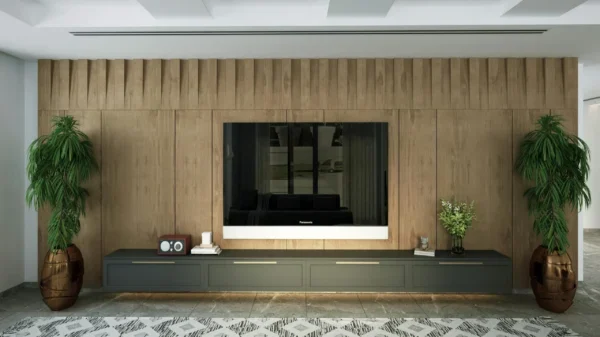
Sound performance plays an essential role in the success of a well-designed media wall because audio quality strongly affects the overall viewing experience. Standard hard surfaces such as drywall reflect sound waves across the room, which can reduce clarity and create echoes during movies and television viewing. Acoustic panel systems help address this issue by introducing absorption layers that soften reflections and distribute sound more evenly across the seating area. Instead of relying on higher speaker volume to compensate for poor acoustics, panel installations improve how sound travels within the room and support clearer dialogue, more balanced audio, and a more comfortable listening environment for everyday entertainment.
How Wood Slats and Felt Backing Enhance the Home Theater Experience
Many acoustic decorative panels combine vertical wood slats with dense felt backing to improve sound clarity across the viewing area. This layered structure captures reflected audio before it returns into the room, helping reduce echo and support clearer dialogue during movies and television use. The spacing between wood slats disrupts sound wave movement, while the felt backing absorbs residual vibration that would otherwise bounce across hard wall surfaces. Together, these materials create a more balanced listening environment without requiring changes to speaker placement.
This improvement becomes especially noticeable in open-concept living spaces, where sound often travels freely between connected areas and reduces audio definition around the television zone. For this reason, BD Home Studio frequently incorporates acoustic panel systems behind televisions or along adjacent walls to support comfortable listening conditions while maintaining a clean, integrated media wall design that enhances both performance and appearance.
Popular Panel Styles for Media Walls
Media walls can be customized to suit a wide range of interior aesthetics, and the selection of panel style plays a major role in shaping both the atmosphere of the room and the perceived scale of the television area. Decorative panels influence how the wall interacts with surrounding furniture, lighting, and architectural features, which allows designers to create a media wall that feels intentional and visually balanced rather than purely functional. Thoughtful material selection also helps the television integrate naturally into the broader composition of the living space.
Vertical Fluted Wood for Contemporary Homes
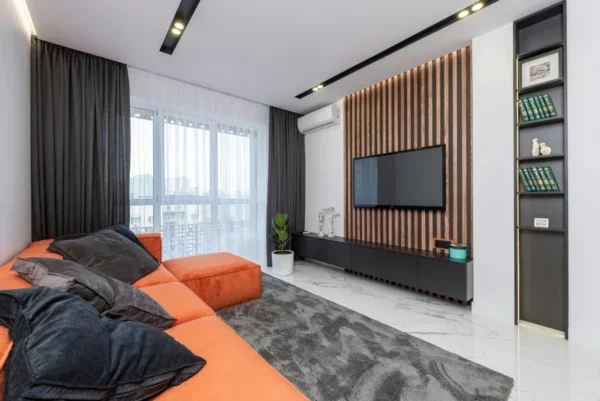
Vertical fluted wood panels introduce rhythm, texture, and height to the wall surface, making them a popular choice for contemporary interiors that benefit from subtle architectural detail. Their linear structure naturally guides the eye upward, which helps ceilings appear taller and creates a refined frame around the television area without overwhelming the wall. This vertical movement adds structure to the media wall while keeping the overall look clean and modern.
Natural oak tones bring warmth and softness to transitional interiors that combine traditional and modern elements, while darker walnut finishes create stronger contrast and visual depth in larger living rooms where the media wall must anchor a wider seating layout. Painted fluted panels support minimalist palettes by introducing texture without relying on strong color variation, which allows the wall to remain visually interesting while maintaining a calm and cohesive appearance. Designers often pair fluted paneling with floating shelving and integrated lighting to highlight the texture of the surface and create a layered composition that supports both display and storage functions.
Large Format Stone-Look Panels for Ultra-Luxury
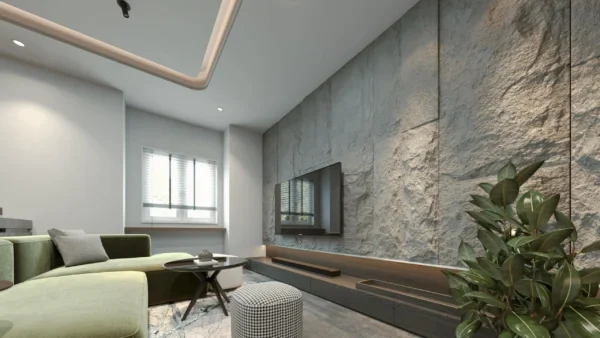
Large format stone-look panels create a bold architectural backdrop that transforms the television wall into a statement feature within the living room. Their expansive surface coverage reduces visual interruption from seams or joints, which helps maintain a clean and continuous appearance across the media wall. This uninterrupted scale strengthens the presence of the television area and allows it to feel proportionate within larger interiors.
These panels work especially well in rooms with higher ceilings or open seating arrangements because their scale supports the visual weight needed to balance the surrounding space. Stone-inspired finishes also introduce depth and contrast that enhance the overall structure of the wall without relying on excessive ornamentation. Designers often coordinate stone-look panels with fireplaces, console surfaces, or architectural columns to create continuity across multiple focal points in the living area, allowing the media wall to connect naturally with adjacent features rather than standing apart as a separate installation.
At BD Home Studio, panel materials are selected based on how they relate to nearby finishes such as flooring, cabinetry, and upholstery, ensuring the media wall contributes to a unified interior composition instead of functioning as an isolated design element.
Integrating LED Lighting and Floating Shelves into Your Paneling
Lighting plays a significant role in shaping the atmosphere around a media wall, especially when integrated LED strips introduce subtle illumination that enhances panel texture without distracting from the screen. Designers often position lighting along vertical panel edges to highlight structure, beneath floating shelves to create a soft layered glow, behind floating panels to produce a perimeter halo effect, or above the television using recessed fixtures that support comfortable evening viewing conditions. Together, these lighting strategies add depth, improve visual balance, and help the media wall remain functional across different times of day.
Floating shelves add another layer of functionality by providing space for decorative objects, books, and media accessories without introducing bulky cabinetry that could interrupt the clean lines of the wall. When designers align shelves carefully with panel spacing and layout rhythm, the shelves appear integrated rather than attached, which preserves the architectural character of the installation and strengthens the sense of continuity across the surface. At BD Home Studio, lighting placement and shelf positioning are coordinated with panel orientation from the beginning of the design process so every element supports a cohesive, refined media wall composition.
Start Designing Your Custom Media Wall Today
A thoughtfully designed media wall strengthens both the performance and appearance of a living space. Decorative panel systems create structure around the television while supporting lighting balance, acoustic comfort, and cable organization. At BD Home Studio, media wall planning begins with understanding how the room functions throughout the day. Panel finishes are selected to complement flooring, seating, and window treatments. Lighting placement is coordinated with viewing angles, and storage solutions are integrated without disrupting visual clarity.
The result is a media wall that feels permanent, balanced, and aligned with the rest of the interior environment.
If your living room includes exposed wiring, undersized television framing, or limited storage flexibility, a custom panel solution can redefine how the space functions.
Frequently Asked Questions (FAQs)
1. Why are decorative wall panels popular for TV media walls?
Decorative wall panels are popular because they transform televisions into integrated architectural features rather than standalone objects. Panel systems conceal wiring and improve overall organization around the viewing area. They also introduce texture that strengthens the visual structure of the room. Acoustic panel options help improve sound clarity during movies and television viewing. Lighting integration further enhances comfort during evening use. Designers often coordinate panel finishes with surrounding furniture and flooring for consistency. This combination makes media walls feel intentional and refined.
2. Can wall panels improve sound quality in living rooms?
Yes, acoustic wall panels improve sound quality by reducing echo and limiting audio reflections from hard surfaces. Materials such as felt backing absorb sound energy before it returns into the room. Wood slat panel structures also help disrupt sound wave movement. These improvements make dialogue clearer during television viewing. Open-concept layouts benefit especially from acoustic panel installations. Panels support balanced listening without requiring speaker upgrades. Proper placement ensures the best performance results.
3. Are decorative panels safe for mounting televisions?
Decorative panels are designed to support television mounting when installation planning is completed correctly. Structural backing behind panel systems allows brackets to be secured safely. Cable routing pathways are also included within panel assemblies. Professional installation ensures weight distribution remains balanced across the wall surface. Designers coordinate mounting height with seating positions for comfortable viewing angles. Panel placement is adjusted to align with equipment requirements. This preparation ensures both safety and performance reliability.
4. What materials work best for luxury media wall panels?
Several materials work well depending on the interior style of the home. Fluted wood panels introduce warmth and vertical rhythm to contemporary spaces. Stone-look panels create strong architectural presence in larger rooms. Fabric-backed acoustic panels improve sound clarity while adding texture. Painted panel finishes support minimalist interiors with subtle contrast. Designers often combine multiple materials for layered compositions. The final selection depends on lighting direction and surrounding finishes.
5. How does BD Home Studio customize TV media wall designs?
BD Home Studio begins by evaluating the layout of the living space and the position of seating areas. Designers assess lighting direction to determine which panel finishes reduce glare effectively. Cable management pathways are planned before installation begins. Panel materials are selected to coordinate with flooring and furniture finishes. Integrated lighting and shelving solutions are added based on storage needs. Acoustic panel placement may also be included to improve sound clarity. This coordinated approach ensures the media wall supports both performance and visual harmony.
Transform Your Living Room with a Tailored Media Wall Solution
A custom media wall introduces structure, clarity, and comfort into one of the most frequently used areas of the home. Decorative panel systems conceal technology while strengthening architectural presence and improving sound performance.
BD Home Studio works closely with homeowners to develop media walls that integrate seamlessly with existing interiors. From fluted wood installations to stone-inspired panels and integrated lighting systems, each solution is planned to support long-term usability and visual harmony.
If you are considering upgrading your television area, a personalized consultation can help identify panel configurations that align with your layout and lifestyle. The right media wall design can reshape how your living space feels every day.
 info@bdhomestudio.com
 9560 Blenheim Blvd, Fairfax, VA 22031
  +1 571 470 9440