Designer wallpaper ideas for powder rooms offer one of the most effective ways to shape personality in compact interiors. These spaces support expressive materials, layered textures, and distinctive patterns. Primary living areas remain visually calm. Powder rooms allow stronger design direction without affecting nearby rooms.
At BD Home Studio, wallpaper selection holds a central role in the design process. Designers treat wallcoverings as architectural elements. Teams coordinate wallpaper with mirrors, lighting, cabinetry, hardware finishes, and flooring transitions. Early coordination creates stronger visual balance. Careful planning produces powder rooms that feel intentional and memorable.
This guide explores how wallpaper transforms compact interiors. The guide explains how scale selection improves spatial perception. The guide reviews materials that perform well in bathroom environments. The guide presents coordination strategies that align wallcoverings with fixtures and finishes. Clear planning leads to cohesive and durable results inside small powder room layouts.
Why the Powder Room is the Perfect Place for Bold Design?
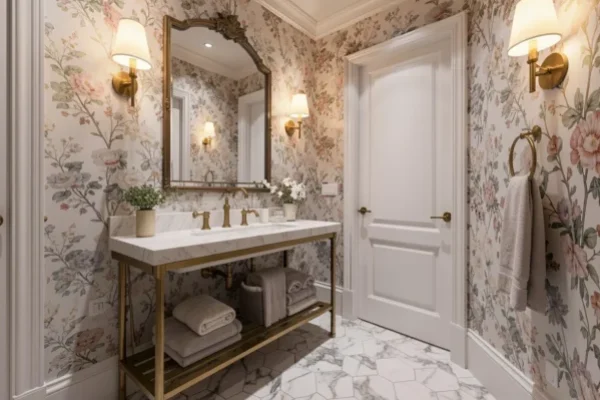
Powder rooms hold a unique role within residential interiors. These spaces serve guests and support short visits rather than extended routines. Limited exposure time creates freedom for stronger design expression. Homeowners can introduce bold materials and distinctive patterns without affecting the atmosphere of larger rooms.
Wallpaper adds visual richness at the wall surface level. Pattern becomes the focal element inside the space. Decorative impact increases without adding extra objects or accessories. The room feels curated, intentional, and visually complete with fewer layers of decoration.
Compact wall dimensions create a controlled environment for color relationships. Strong tones remain balanced inside the room. Visual energy stays contained within the powder room boundary. Coordinated finishes strengthen transitions between nearby spaces and maintain overall interior harmony.
BD Home Studio approaches powder room design as an opportunity to introduce character and identity within a small footprint. Designers align wallpaper selections with surrounding finishes and architectural details. The result supports continuity across the home while adding personality inside a compact and memorable guest space.
Choosing the Right Wallpaper Scale for Small Rooms
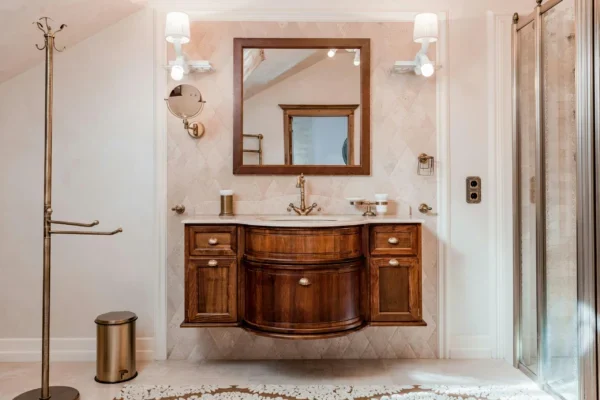
Scale influences how wallpaper behaves inside compact interiors more than many homeowners expect. Pattern size, spacing, and direction shape how a powder room feels from the doorway and throughout the space. These visual elements affect depth perception, wall balance, and overall atmosphere inside the room.
Designers do not rely on small prints as a default solution. They evaluate ceiling height, mirror placement, and lighting angles before recommending pattern scale. Taller ceilings support larger vertical motifs. Lower ceilings benefit from controlled pattern spacing. Mirror placement affects reflection lines and visual rhythm across the walls. Lighting angles influence how texture and contrast appear throughout the day.
Careful scale selection improves spatial balance and strengthens visual structure. Coordinated pattern sizing allows wallpaper to enhance the architecture of the powder room rather than compete with surrounding fixtures and finishes.
The Myth of Small Patterns: Why Oversized Prints Work
Many homeowners assume smaller patterns create the impression of more space. In practice, tightly repeated motifs fragment wall surfaces and reduce visual clarity. Dense repetition interrupts eye movement and weakens overall composition inside compact powder rooms.
Oversized prints provide stronger visual structure. Large botanicals, abstract forms, and wide geometric patterns support smoother visual movement across the wall surface. Surfaces feel calmer and more organized. The room feels composed instead of crowded.
Powder rooms with floating vanities or open wall areas benefit from larger pattern scale. Large prints frame fixtures clearly and reinforce mirror alignment. Symmetry becomes easier to achieve. Wall composition appears balanced and intentional from multiple viewing angles.
BD Home Studio often introduces large-scale wallpaper when the goal involves creating a strong design presence inside a limited footprint. Designers coordinate pattern direction with lighting placement and mirror positioning. This strategy strengthens architectural rhythm and supports a memorable powder room environment.
Creating an Illusion of Space with Vertical Stripes and Metallics
Vertical movement in wallpaper patterns encourages ceilings to feel taller inside compact powder rooms. Stripe-inspired layouts, elongated motifs, and tonal gradients guide the eye upward and strengthen vertical emphasis across the wall surface. This direction improves spatial perception and supports a more balanced room proportion.
Metallic accents introduce an additional visual layer that improves brightness without increasing fixture output. Reflective finishes interact with mirror lighting and overhead illumination. Surfaces capture light and distribute it more evenly across the space. The room feels clearer and more refined.
These adjustments strengthen architectural clarity and support visual structure across compact walls. Vertical alignment improves proportion. Controlled reflection improves brightness. The overall environment remains comfortable, cohesive, and visually intentional within the powder room layout.
Top Designer Wallpaper Trends for Powder Rooms
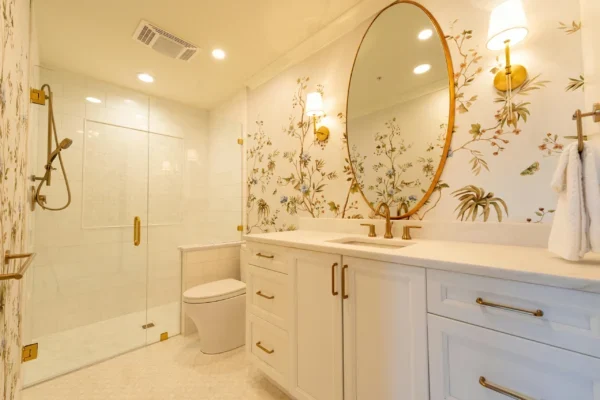
Wallpaper trends shift alongside broader interior preferences, yet certain materials and motifs continue to perform well in compact powder rooms. These selections introduce texture, depth, and visual structure while maintaining balance with surrounding finishes. Designers rely on materials that support clarity rather than visual congestion inside small wall areas.
Textured neutrals create subtle dimension without overpowering nearby surfaces. Botanical patterns introduce movement and softness across compact walls. Geometric motifs support structure and alignment with mirrors and cabinetry. Tonal layers strengthen depth without introducing strong contrast shifts. Each category supports visual interest while preserving spatial control.
BD Home Studio evaluates every wallcovering option based on lighting response, surface reflectivity, and finish compatibility. Designers study relationships between wallpaper, cabinetry tones, stone surfaces, mirrors, and hardware finishes before confirming selections. This coordination supports visual continuity and ensures the powder room feels intentional, refined, and connected to the surrounding interior environment.
Dramatic Dark Botanicals and Florals
Dark botanical wallpapers introduce contrast that highlights mirrors and plumbing fixtures with clarity and intention. Deeper tones strengthen layered depth across compact powder room walls. Surfaces feel richer and more defined. The room develops a refined and structured atmosphere instead of appearing visually reduced.
Floral motifs with shadowed backgrounds add movement across the wall surface without the need for additional decorative accessories. Pattern becomes the primary visual feature inside the space. Warm metal finishes such as brushed brass strengthen contrast and create a coordinated relationship between wallpaper, mirrors, and plumbing fixtures. Surfaces appear balanced and visually connected.
Carefully positioned lighting reveals texture and tonal variation across darker wallpapers. Reflections from mirror lighting and overhead fixtures increase depth perception across the wall surface. Controlled illumination strengthens pattern visibility and supports a cohesive powder room composition that feels intentional and memorable.
Textured Grasscloths for Organic Warmth
Grasscloth wallpaper introduces natural variation that softens the appearance of compact powder rooms. Each panel carries subtle tonal shifts that create depth across the wall surface. The result is visual interest without heavy pattern repetition. Walls feel layered and refined while maintaining a calm overall effect.
This material pairs well with wood vanities, stone countertops, and ceramic fixtures. Natural fibers complement organic finishes and create a cohesive relationship between surfaces. Texture connects cabinetry, countertops, and wall finishes into a unified composition.
Grasscloth supports transitional interiors where warmth and restraint must coexist within a limited footprint. The material introduces softness while preserving structure. The space feels balanced, grounded, and intentionally designed for both comfort and visual clarity.
Geometric and Art Deco Inspirations
Geometric wallpaper introduces structure that aligns naturally with mirrors and cabinetry edges inside powder rooms. Linear motifs reinforce symmetry around vanity areas and improve visual clarity across wall surfaces. The result is a more organized and intentional composition that supports both function and design balance.
Art Deco–inspired patterns remain especially effective in powder rooms that feature polished metal hardware. Their structured geometry complements curved mirrors and angular fixtures at the same time. This balance creates a refined relationship between decorative pattern and architectural elements.
These designs perform well when lighting enhances their dimensional qualities. Side lighting and overhead fixtures reveal texture and depth from multiple angles. Shadows and highlights strengthen pattern definition, allowing the wallpaper to contribute both structure and visual interest within the compact space.
Technical Considerations for Bathroom Wall Coverings
Wallpaper performance depends heavily on installation conditions inside powder rooms. Even powder rooms without showers experience humidity variations throughout the day due to handwashing, airflow changes, and temperature shifts. These conditions influence how wallcoverings age and maintain their appearance over time. Selecting appropriate materials helps ensure long-term consistency and visual stability across all wall surfaces.
Selecting Moisture-Resistant and Vinyl Options
Vinyl-backed wallpaper provides stronger stability in environments where humidity levels fluctuate. These materials resist surface distortion such as bubbling, peeling, or seam separation. They also remain easier to clean and maintain compared to traditional paper-based alternatives, making them suitable for high-touch guest areas.
Performance-grade wallcoverings also retain color clarity under changing lighting conditions. This is especially important in powder rooms where artificial lighting, mirror reflections, and limited natural light all interact with wall surfaces. These materials are ideal for spaces near exterior walls or areas with variable airflow, where temperature shifts are more noticeable.
BD Home Studio frequently recommends vinyl-supported wallcoverings when durability and visual refinement must work together. These selections ensure the design remains stable while preserving the intended aesthetic over time.
Proper Ventilation to Protect Your Investment
Ventilation plays a critical role in wallpaper longevity and overall performance. Even compact powder rooms benefit from consistent airflow to reduce moisture buildup after use and throughout the day. Without proper ventilation, humidity can accumulate and affect surface adhesion over time.
Correct exhaust fan placement helps regulate air circulation and minimizes moisture exposure on wall surfaces. This reduces stress on seams and helps prevent lifting, curling, or long-term movement. When ventilation is integrated early in the planning process, wallpaper installations maintain structure and appearance for years.
Designers evaluate airflow conditions alongside material selection to ensure performance expectations remain realistic. This approach supports both design quality and long-term durability within the powder room environment.
Coordinating Wallpaper with Fixtures, Mirrors, and Lighting
Wallpaper becomes most effective when it supports surrounding finishes rather than competing with them inside a powder room. Mirrors, cabinet hardware, and lighting fixtures all influence how wallcoverings appear throughout the day as light shifts and reflections change across surfaces. These relationships determine whether the space feels cohesive or visually fragmented.
Careful coordination between wallpaper and architectural elements ensures the room reads as a unified composition. Mirror placement aligns with pattern direction. Hardware finishes complement color tones and texture. Lighting design enhances depth and surface detail without overpowering the wall treatment. When these elements work together, the powder room feels intentional, balanced, and visually complete rather than assembled from separate design choices.
Matching Hardware Finishes (Brass, Matte Black, Nickel) with Wallpaper Tones
Metal finishes strongly influence how wallpaper colors respond under artificial lighting inside powder rooms. Brass fixtures enhance warm botanical palettes and textured neutrals by reinforcing golden undertones and softening contrast. Matte black hardware strengthens geometric wallpaper patterns by increasing visual contrast and sharpening structural lines. Nickel finishes support cooler tonal palettes and reflective surfaces commonly used in contemporary interiors. These finishes create a clean, balanced appearance that pairs well with subtle patterns and minimal designs. The interaction between metal tone and wallpaper color directly affects how the space feels throughout the day.
BD Home Studio coordinates wallpaper undertones with fixture finishes to maintain visual continuity across the entire room. This alignment ensures mirrors, lighting, and hardware feel integrated into the design rather than added as separate decorative elements. The result is a more cohesive and intentional powder room composition.
Lighting placement further enhances wallpaper performance. Side-mounted sconces reveal texture, depth, and surface variation more effectively than overhead lighting alone. This approach allows pattern details to remain visible from multiple viewing angles and strengthens the overall dimensional quality of the space.
Transform Your Small Spaces with BD Home Studio
Powder rooms provide an opportunity to introduce distinctive materials within a controlled architectural environment. Wallpaper selections can strengthen spatial identity while coordinating with cabinetry finishes, lighting placement, and flooring transitions.
At BD Home Studio, designers evaluate how powder rooms connect visually with adjacent areas before recommending patterns or textures. Sample materials are reviewed within the space so undertones remain consistent under actual lighting conditions. Precise installation ensures seams align cleanly around mirrors and fixtures, preserving the integrity of the wall surface. This attention to detail allows compact interiors to feel carefully structured and visually balanced.
If you are considering wallpaper for a powder room or another small space in your home, a personalized consultation can help identify materials that reflect your interior style while supporting long-term durability. The right wallcovering transforms compact rooms into memorable architectural moments.
Frequently Asked Questions (FAQs)
1. Is wallpaper a durable choice for powder rooms?
Wallpaper performs reliably in powder rooms when materials are selected with environmental conditions in mind. Because these rooms typically do not include showers, humidity exposure remains moderate compared to full bathrooms. Vinyl-backed wallcoverings provide additional resistance against occasional moisture changes. Proper installation techniques help maintain seam alignment over time. Ventilation also supports long-term surface stability. Many homeowners choose wallpaper specifically because it introduces visual depth that paint cannot replicate. With appropriate planning, wallpaper remains a dependable solution for compact bathroom spaces.
2. Should wallpaper cover every wall in a powder room?
Full-wall coverage often produces a more cohesive appearance than limiting wallpaper to a single accent surface. Wrapping pattern around the entire room helps mirrors and cabinetry feel integrated with surrounding walls. Accent installations may still work effectively when highlighting a vanity backdrop or architectural feature. Designers evaluate sightlines from the doorway before determining placement strategies. Continuous coverage usually strengthens spatial clarity within compact interiors. Sample placement testing helps confirm the most appropriate approach. The final decision depends on lighting direction and fixture placement.
3. How do I choose the right pattern scale for a small powder room?
Pattern scale should respond to ceiling height and mirror placement rather than room size alone. Larger prints often provide stronger visual continuity than tightly repeated motifs. Vertical movement within patterns helps guide the eye upward, improving spatial perception. Metallic accents can increase brightness when paired with reflective mirrors. Designers typically evaluate how fixtures interrupt the wall surface before recommending scale adjustments. Reviewing samples under actual lighting conditions improves decision confidence. With thoughtful planning, both bold and subtle patterns can support compact spaces successfully.
4. Are textured wallpapers suitable for powder rooms?
Textured wallpapers such as grasscloth can perform well in powder rooms when ventilation remains stable. These materials introduce warmth that complements stone countertops and wood cabinetry. Designers often evaluate airflow conditions before recommending natural fiber wallcoverings. Vinyl-textured alternatives provide similar visual depth with improved moisture resistance. Lighting placement influences how texture appears throughout the day. Professional installation ensures seams remain aligned despite material variation. When coordinated carefully, textured wallpaper strengthens the overall composition of the room.
5. How does BD Home Studio guide wallpaper selection for small spaces?
BD Home Studio begins by reviewing finishes already present near the powder room, including flooring transitions and cabinetry materials. Designers evaluate lighting direction to ensure wallpaper undertones remain consistent throughout the day. Sample selections are tested within the space before final approval. Material recommendations reflect both durability requirements and aesthetic priorities. Hardware finishes are coordinated with wallpaper tones to maintain visual balance. Installation planning ensures alignment around mirrors and fixtures remains precise. This structured approach supports results that feel connected to the broader interior design of the home.
Ready to Redefine Your Powder Room with Designer Wallpaper?
Small spaces deserve thoughtful attention, especially when they create lasting impressions for guests. Carefully selected wallpaper can introduce depth, warmth, and character without overwhelming the rest of your home. At BD Home Studio, each wallcovering solution is tailored to your finishes, lighting conditions, and architectural proportions. Schedule a consultation today and explore how designer wallpaper can bring clarity and personality to your powder room with lasting refinement.
 info@bdhomestudio.com
 9560 Blenheim Blvd, Fairfax, VA 22031
  +1 571 470 9440